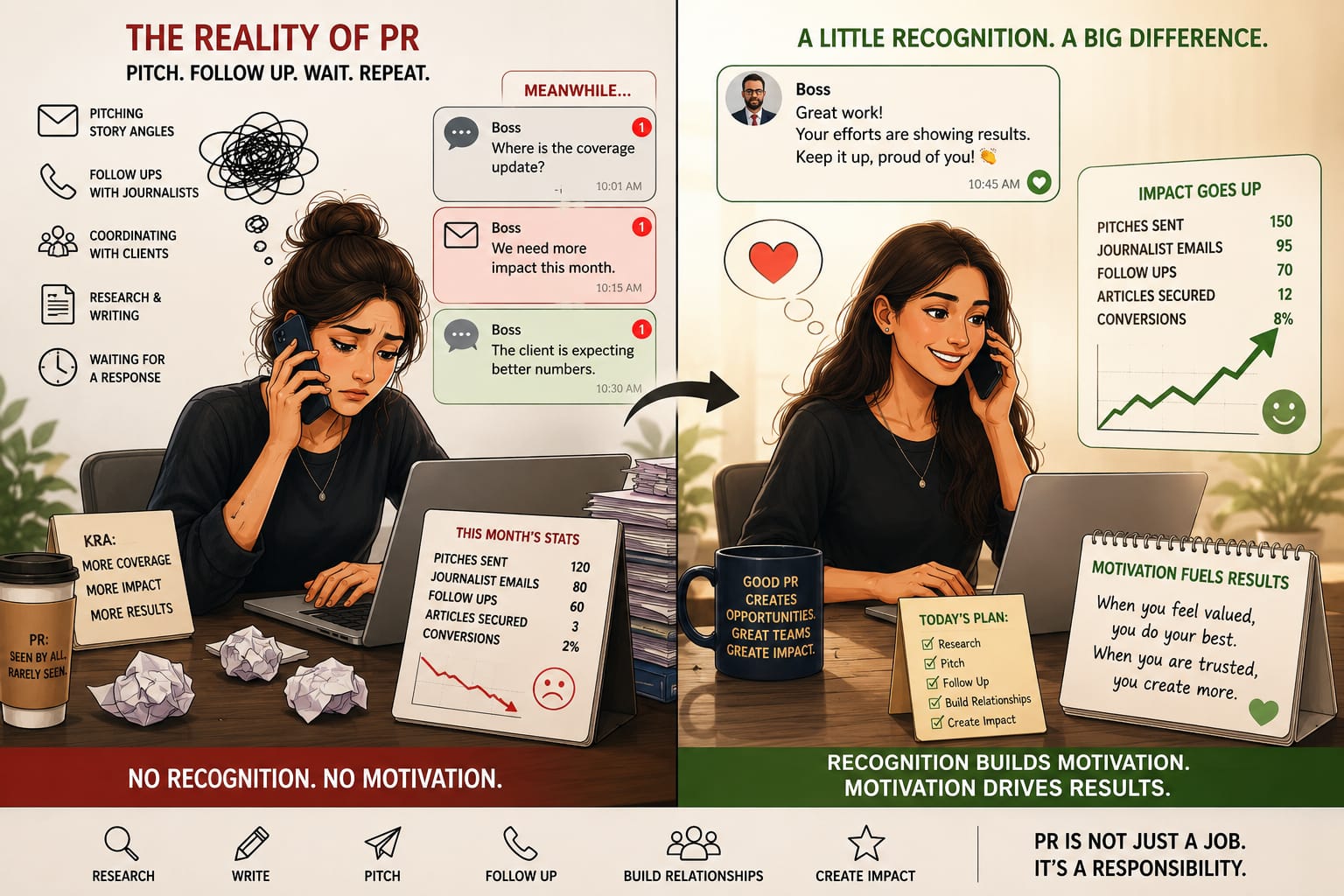
PR is more than getting coveraage. It can look simple from the outside: send a pitch, speak to a journalist and get coverage. But anyone who works in PR knows how much goes into making one story happen. There is research, finding the right angle, writing and rewriting pitches, following up, managing clients and handling rejection before that one opportunity finally comes through.
The Pitch Is the Real Starting Point
A good pitch is not just an email. It is about understanding what a journalist and their readers will find relevant. A PR professional has to turn a client's information into a story that has a reason to be covered. Sometimes, a pitch takes hours to develop, and even then, there is no guarantee of coverage. That is the nature of PR.
The irony is that agencies are paid by clients to create organic media opportunities, but the effort behind those opportunities can sometimes go unnoticed. The person researching the story, writing the pitch, making the calls and following up is a big part of that value. Organic coverage may look effortless, but it rarely is.
Motivation and Recognition Matter
PR is a profession built on relationships, creativity and persistence. It also comes with constant pressure to deliver something new. That is why motivation matters.
An increment is not only about money. It is also a signal that an employee's contribution, growth and effort have been recognised. When people feel valued, they are more willing to go beyond the basic requirements and keep pushing for the next opportunity.
Remote Work Should Not Mean Endless Work
Remote working has made PR more flexible, but it has also made it easier for work to enter every part of the day. Being at home does not mean being available all the time.
Employees should be judged by the quality of their ideas, relationships and results, not by how long they remain online or how much additional work they can take on.
The People Behind the Story
Technology and AI can support research and content creation, but PR will always depend on human relationships and judgement. A journalist needs to trust the person pitching the story, and a PR professional needs to know what is worth pitching and when. That understanding comes with experience.
PR professionals spend their days creating visibility for brands, leaders and organisations. Perhaps it is time to also recognise the people creating that visibility.
Behind every successful story is usually someone who kept thinking, pitching, following up and trying, even after several attempts did not work.
If organisations want better PR, they also need to value the people behind it with recognition, growth, fair compensation and motivation.