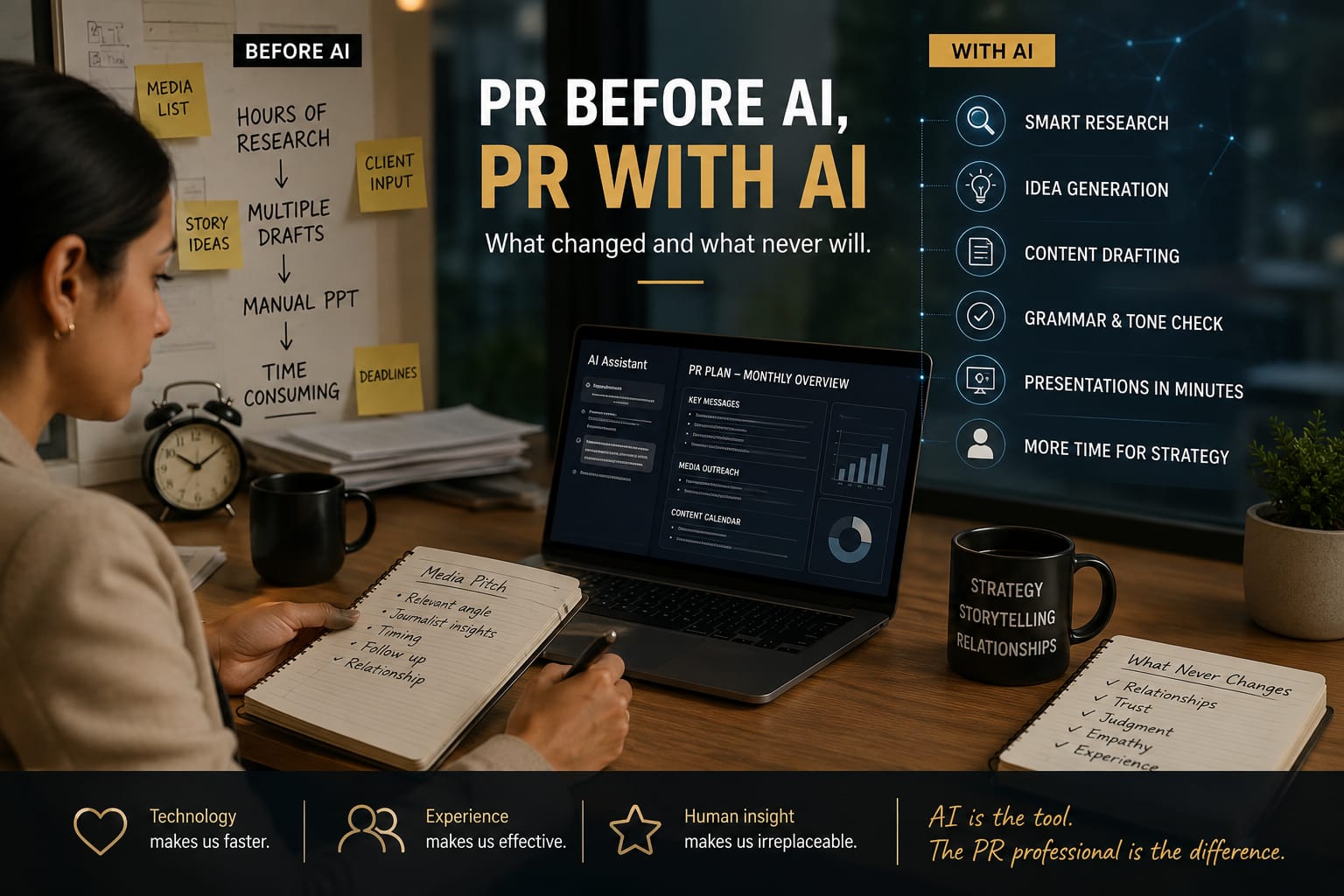
Before ChatGPT, Gemini, and other AI tools became part of our daily routine, public relations was a profession built almost entirely on time, persistence, and experience. Every press release, media pitch, client presentation, spokesperson profile, or thought leadership article started with a blank page. Research meant opening dozens of tabs, reading reports, comparing articles, and carefully piecing together a narrative that was accurate, relevant, and engaging.
As someone who worked in PR before AI became mainstream, I often think about how different our daily routines were. Drafting a monthly PR plan for a client wasn't a task that could be completed in an hour or two. It involved brainstorming story ideas, researching industry trends, mapping media opportunities, aligning with business goals, and then presenting everything in a well-designed PowerPoint. Creating that presentation itself could take an entire day. Every slide was built manually, every sentence was rewritten several times, and every design element was adjusted until it looked just right.
Today, many of those tasks have become significantly faster.
AI can help structure ideas, suggest headlines, improve grammar, organize presentations, summarize research, and even offer different writing styles within minutes. Instead of spending hours polishing a draft, PR professionals can focus on refining the message and ensuring it aligns with the client's voice and objectives.
The difference is remarkable, not because AI writes better than humans, but because it removes many of the repetitive tasks that once consumed our time.
One of the biggest changes I have personally experienced is in content creation. Whether it's drafting a press release, writing a media pitch, preparing FAQs, creating LinkedIn posts, or developing thought leadership articles, AI has become an efficient assistant. Almost every sentence can now be reviewed for clarity, grammar, readability, and tone within seconds. That doesn't mean the thinking has disappeared; it simply means the editing process has become much smoother.
Client presentations have also transformed. Earlier, building a monthly plan involved hours of formatting, rearranging slides, finding the right visuals, and ensuring the flow made sense. Today, AI helps organize information much faster, allowing us to spend more time discussing strategy instead of formatting PowerPoint slides.
But despite all these advantages, one aspect of PR remains as challenging as ever: media relations.
Writing has become easier, but pitching has not.
A well-written email is only one small part of successful media outreach. Understanding what a journalist covers, identifying the right news angle, knowing when to pitch, respecting deadlines, following up thoughtfully, and building relationships over months or even years cannot be automated.
Journalists don't respond because an email is grammatically perfect. They respond because the story is relevant.
They trust professionals who consistently understand their beat, respect their time, and bring meaningful ideas instead of promotional content. That is something AI cannot replicate.
Similarly, crisis communication continues to rely heavily on human judgment. During sensitive situations, there is rarely a perfect prompt that can generate the right response. Experience, empathy, business understanding, and the ability to make careful communication decisions still define successful PR professionals.
AI also has limitations that every communicator should recognize. It can occasionally generate incorrect information, misunderstand context, or produce content that sounds polished but lacks originality. That's why every draft still needs human verification. In many ways, AI is an excellent first-draft partner, but it should never become the final decision-maker.
Perhaps the biggest lesson AI has taught our industry is that efficiency and creativity are not the same thing.
AI can help us work faster. It cannot replace curiosity. It cannot build relationships. It cannot attend a press conference and understand the mood in the room. It cannot negotiate an exclusive interview or sense when a spokesperson should say less instead of more.
The future of public relations isn't about choosing between humans and AI. It's about combining the strengths of both.
The professionals who will thrive are not necessarily those who use AI the most, but those who know when to rely on it and when to rely on their own experience.
Having worked in PR before and after the rise of AI, I see technology as one of the biggest productivity enablers our industry has ever experienced. It has reduced the time spent on repetitive tasks, improved the quality of first drafts, and allowed communicators to focus more on strategy, creativity, and relationships.
At the end of the day, clients don't hire PR professionals simply to write. They hire us to think, advise, build trust, and create stories that people genuinely care about.