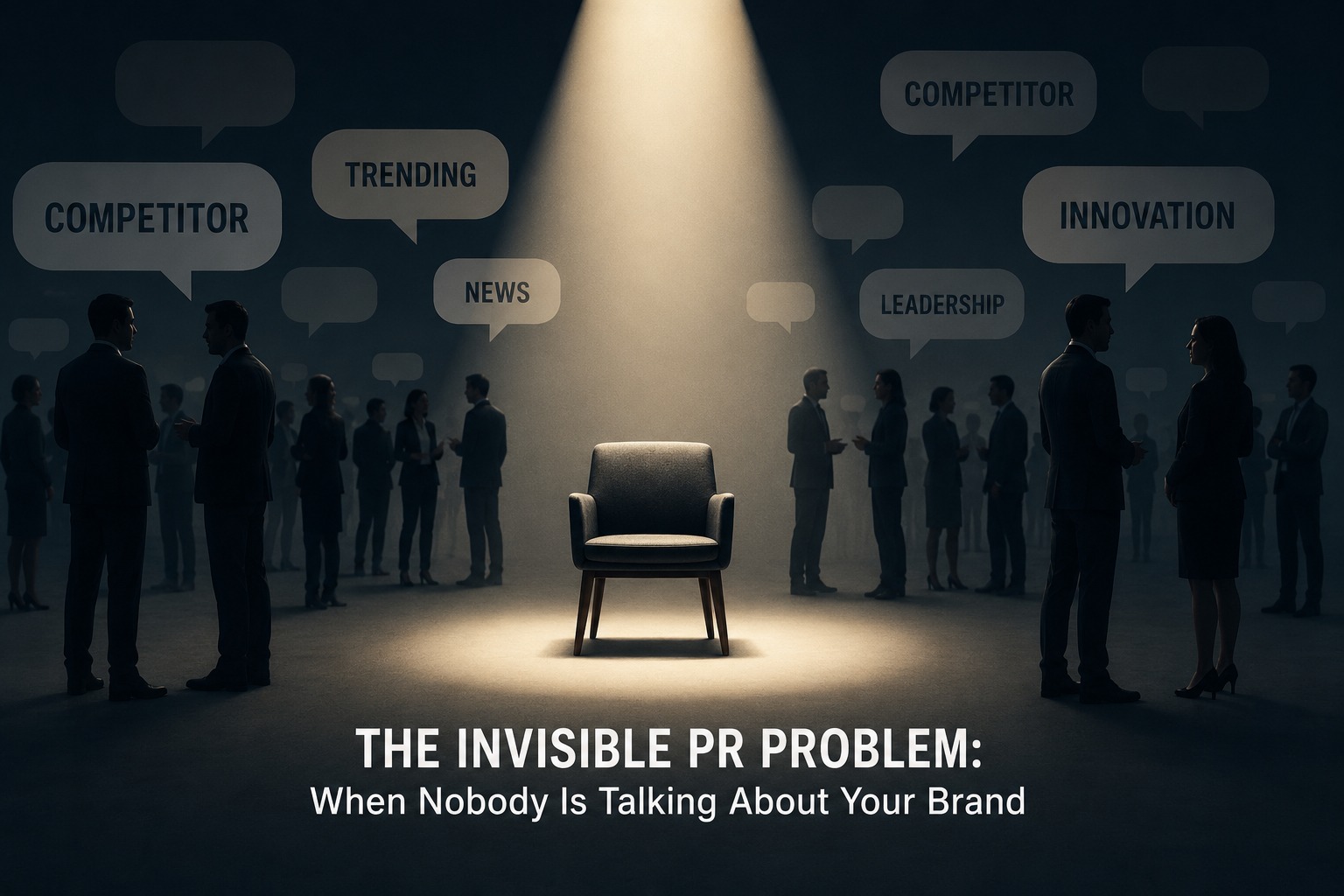
When brands think about public relations, they often focus on negative headlines, crisis management, or securing positive media coverage. But there is another PR problem that receives far less attention: silence. A brand that nobody is talking about may appear to have no reputation problem. In reality, it may have a visibility problem that can quietly limit growth, credibility, and opportunities. In a crowded marketplace, being invisible can be just as challenging as being negatively perceived.
Today, consumers, investors, employees, and business partners often research a company before making a decision. They look at news coverage, search results, social media, leadership profiles, reviews, and industry conversations. If a brand has little meaningful presence across these channels, people may struggle to understand what makes it credible or relevant.
This does not necessarily mean the company is doing something wrong. It may simply mean that its achievements, expertise, and perspectives are not being communicated effectively. A business can have an excellent product, an experienced leadership team, and years of industry experience, but if those strengths remain invisible, they cannot influence public perception.
One reason good brands get ignored is that they communicate only when they have something to sell. Product launches, company announcements, and promotional campaigns may generate short-term attention, but they rarely create sustained authority. Audiences and journalists are looking for more than promotional messages. They are interested in ideas, insights, trends, opinions, data, and people.
This is where strategic PR becomes important. Instead of asking, “How can we get coverage?”, brands should ask, “What can we contribute to the conversation?”
A technology company can build authority by sharing its perspective on artificial intelligence, cybersecurity, or digital transformation. A sports organisation can contribute insights into the changing business of Indian sports. A founder can become a credible voice on entrepreneurship, innovation, or industry trends.
The goal is not simply to put a company's name in as many publications as possible. The real objective is to create a strong association between the brand and the subjects it wants to own. Consistent, relevant visibility can gradually turn an unfamiliar company into a recognised industry voice.
Digital PR makes this even more valuable. A strong media story can continue working long after publication. It can appear in search results, be shared on social platforms, strengthen an executive's profile, and contribute to the brand's overall digital footprint. As search increasingly incorporates AI-powered answers and conversational discovery, credible third-party mentions and authoritative content can become even more important.
This means PR should not be viewed as a short-term campaign that begins and ends with media coverage. It should be treated as an ongoing investment in visibility, authority, and reputation.
If nobody is talking about your brand, the solution may not be more advertising. It may be a stronger story.
Brands need to identify the conversations their audiences care about, uncover the expertise within their organisations, give their leaders a voice, and develop insights and stories that genuinely deserve attention.
Because the biggest PR problem isn't always a bad headline. Sometimes, it's having no headline at all.