The Monday Morning Reality of PR
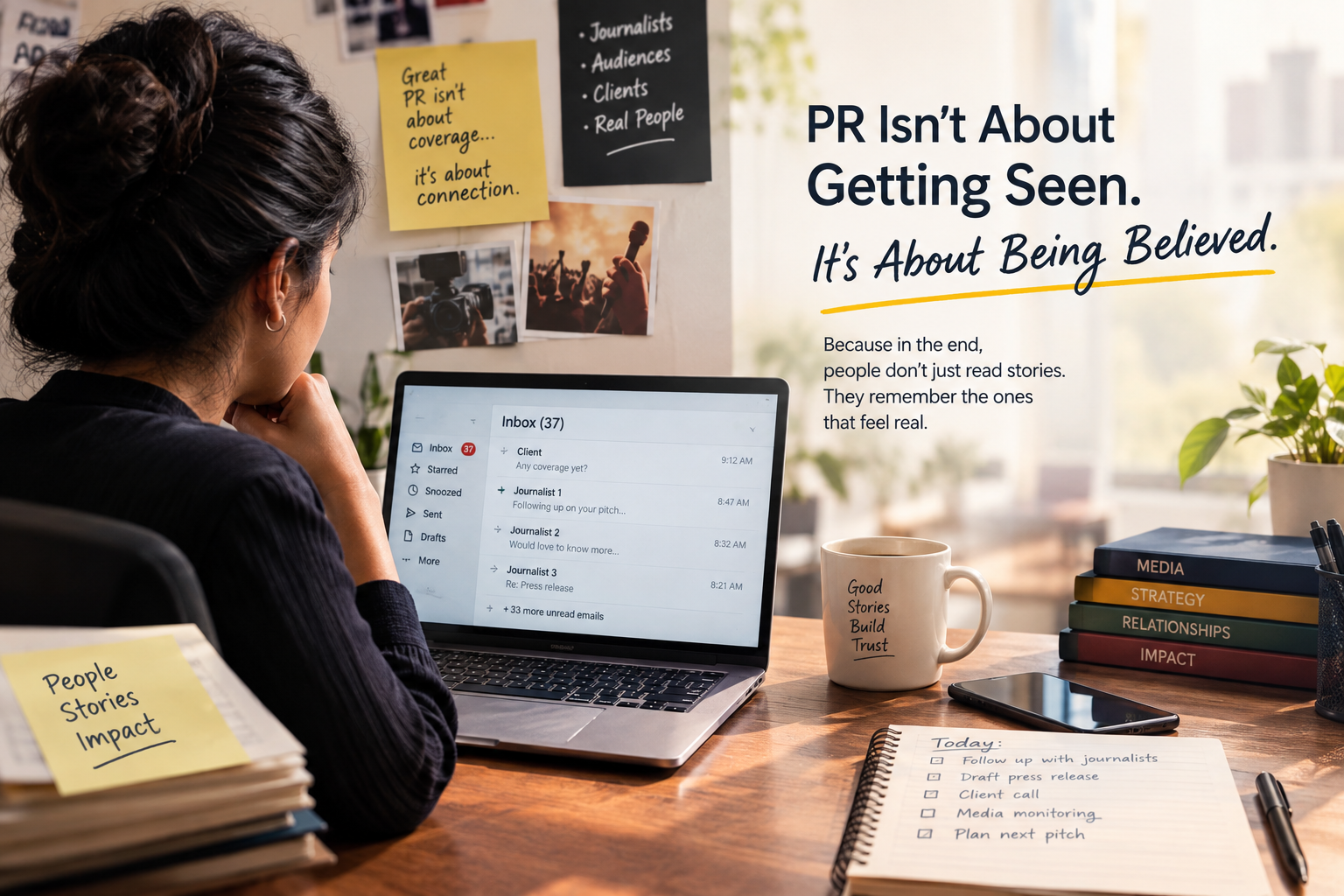
At 9:47 on a Monday morning, a PR professional is staring at an inbox with 37 unread emails, three unanswered journalist messages and a client asking, “Any coverage yet?”
It is a familiar scene in the world of public relations.
For someone outside the industry, PR can sometimes look simple: send a press release, speak to a journalist, get an article published and share the coverage with the client. But anyone who has actually worked in PR knows that the job is rarely that straightforward.
PR is, at its heart, about people. It is about understanding what a journalist cares about, what an audience wants to read, what a client wants to communicate and, most importantly, where these three things meet.
The Question Behind Every Good Pitch
A good PR professional does not simply ask, “How can I get my client into the news?”
They ask, “Why should anyone care about this story?”
That small shift in thinking can change everything.
Take a technology company launching a new product. The easy story is the product itself. The better story might be about how that technology is changing the way a small business owner works, helping a young entrepreneur save time, or quietly transforming an entire industry.
The product becomes part of the story rather than the entire story.
And that is where PR becomes interesting.
The Work Nobody Sees
Behind every piece of coverage is usually a lot of work that nobody sees.
There are calls that don't get returned, pitches that are ignored, stories that change at the last minute, and interviews that take days to coordinate. Sometimes, after hours of effort, the answer is simply: “Not for us.”
And then, unexpectedly, a journalist responds:
“Interesting. Can you send me more details?”
For a PR professional, those few words can make an entire day.
Because behind that response is something more valuable than just coverage — it is the possibility of a story that people genuinely want to read.
PR Has Changed
The PR industry itself has changed dramatically.
Today, people do not rely only on newspapers or television to form opinions about a company. They see brands on LinkedIn, Instagram, YouTube, podcasts, newsletters, and countless other platforms. Employees, customers, and even a single social media post can influence how a brand is perceived.
This means PR is no longer just about managing what a company says.
It is about building credibility around what the company does.
And credibility cannot be created overnight.
Attention Can Be Bought. Trust Has to Be Earned.
A company can spend millions on advertising, but if people don't trust its actions, the message will eventually lose its impact.
PR works differently. It tries to earn attention rather than simply buy it.
That is why the best PR stories often feel less like advertisements and more like conversations.
They have people in them. They have challenges, experiences, lessons and sometimes even failures.
Because audiences don't connect with corporate statements.
They connect with stories.
The Story People Remember
Perhaps that is what makes PR both challenging and rewarding.
Behind every pitch, press release and media interaction is a simple human question:
Why should this matter to me?
The PR professionals who can answer that honestly are the ones who create stories that people don't just read — they remember.