A company gets mentioned in a newspaper. The article is published, shared on social media, and discussed for a day or two. Then the next big story comes along.
It is easy to think the value of that coverage ends there.
It doesn't.
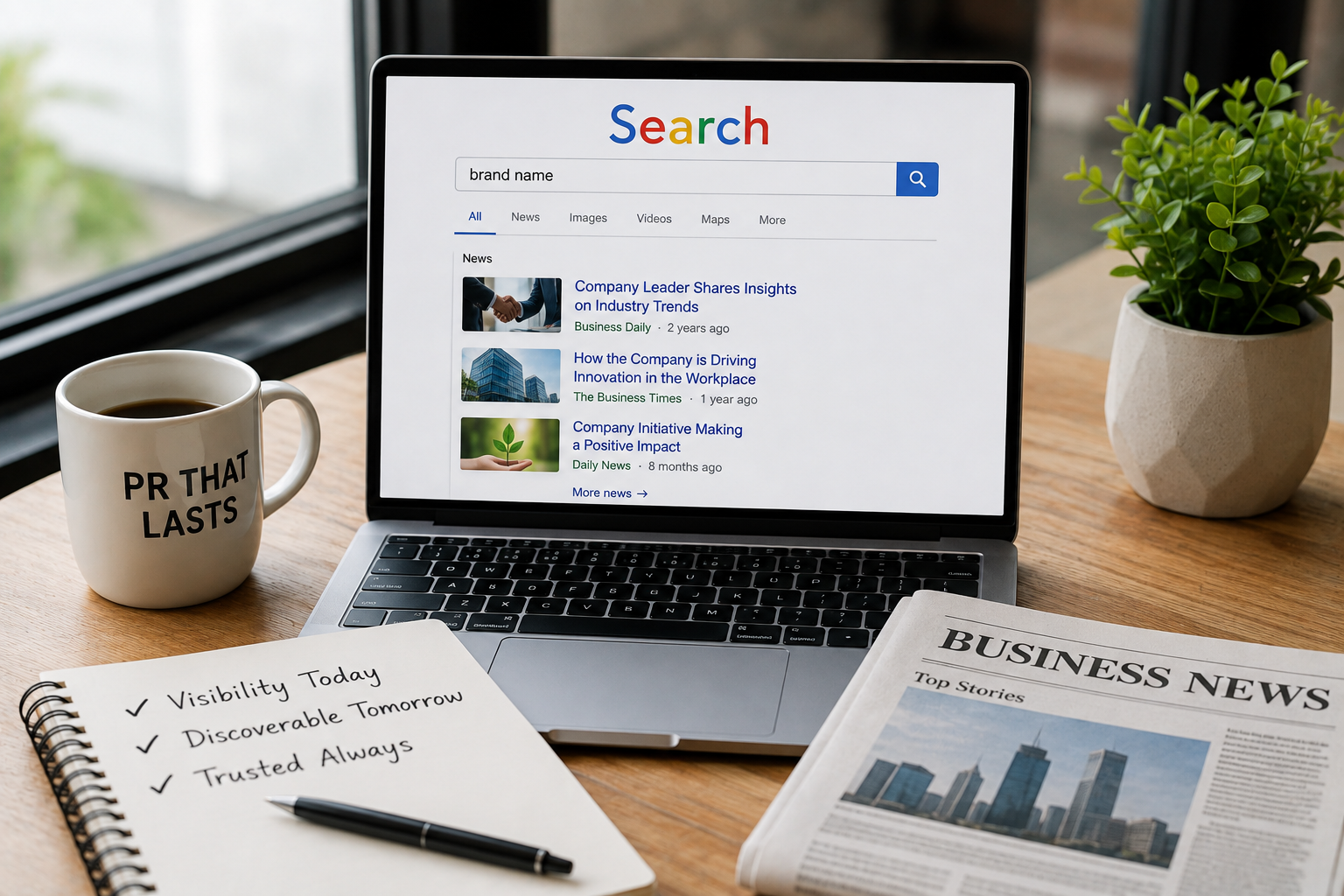
Search for a company today, and you may find an interview with its founder from two years ago, an article about a new business initiative or a story that featured one of its senior leaders. Some of these stories may not be recent, but they still tell people something about the company.
That is one of the things that makes public relations different from advertising.
An advertisement runs for as long as the campaign lasts. A good media story can stay around for years.
Consider someone who has just heard about a company for the first time. Before reaching out, they may search for the business online. A few relevant articles or interviews can give them a better idea of what the company does, who is behind it, and what others have said about its work.
This is where a media mention can become much more valuable than it first appears.
A story published today can reach one audience when it goes live. Months later, the same article can be found by a completely different person through a Google search. A journalist researching an industry. An investor looking into a company. A potential employee checking out a future employer. Or a customer trying to decide whether a business is worth considering.
The audience keeps changing, even when the article stays the same.
That is why PR should not be measured only by the number of articles a company gets in a month. The bigger question is what those stories say about the business and whether they remain useful after the initial coverage has passed.
For example, an interview with a founder about a growing industry may not be tied to a particular product or campaign. But someone searching for that founder months later could still come across the interview. It gives them another reason to understand the person and the business behind the name.
The same goes for expert opinions.
When business leaders comment on issues affecting their industry, those comments become part of their public profile. Over time, a collection of interviews, articles and expert views can show what a leader knows and what the company stands for.
Of course, this does not mean every media mention will have a lasting impact. Some stories will naturally have a shorter life. A routine announcement may be relevant for a few days and then fade away.
The stories with greater staying power are usually the ones that offer something useful. They answer a question, explain an issue, share an experience or bring a fresh perspective to a topic people already care about.
That is also why the story matters as much as the coverage.
Getting a brand into the news is one thing. Getting it there for the right reasons is another.
A company that appears repeatedly in stories that are relevant to its industry slowly becomes more familiar to people. Its leaders become recognisable. Its expertise becomes easier to find. And when someone eventually needs the product, service or expertise that the company offers, the brand is no longer completely unfamiliar.
PR works quietly in this way.
There may not be an immediate sale after an article is published. There may not even be an obvious response from readers. But the story remains available, ready to be discovered by the next person who searches.
This is why a headline should not be viewed only as a headline.
It can become part of a company's online history. It can be shared again, found through search, and used as a reference long after the original story has disappeared from the front page.
For businesses, that makes earned media worth looking at differently. The value of a good story is not limited to the day it appears.
Sometimes the most important reader is not the one who sees it today.
It is the person who finds it six months later, when they are deciding whether your company is worth knowing.